 by
by The numbers reveal a brutal reality the Steelers never saw coming
For months, the hope in Pittsburgh was that a change of scenery and a legendary arm could resurrect championship dreams. But after a deep dive into the film and the numbers, a disturbing picture has emerged—one that explains why the fanbase is reaching a boiling point. The future Hall of Famer isn’t just declining; he’s becoming an active liability for a team with playoff aspirations.
The One Stat That Exposes Rodgers’ Devastating Decline
📉 The Alarming Number: 65.0 Passer Rating
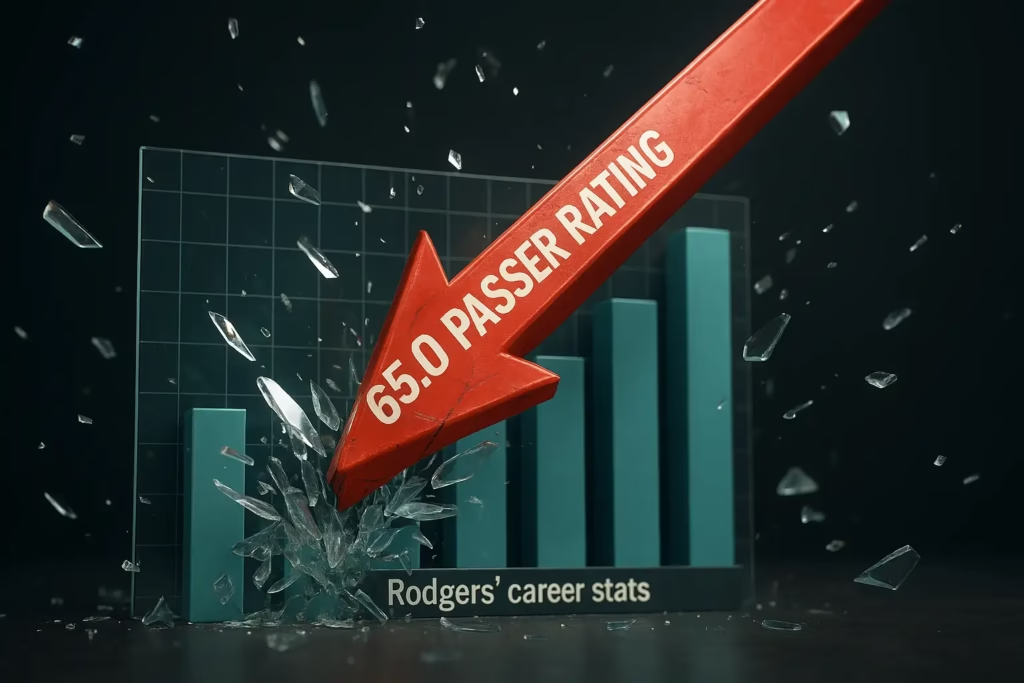
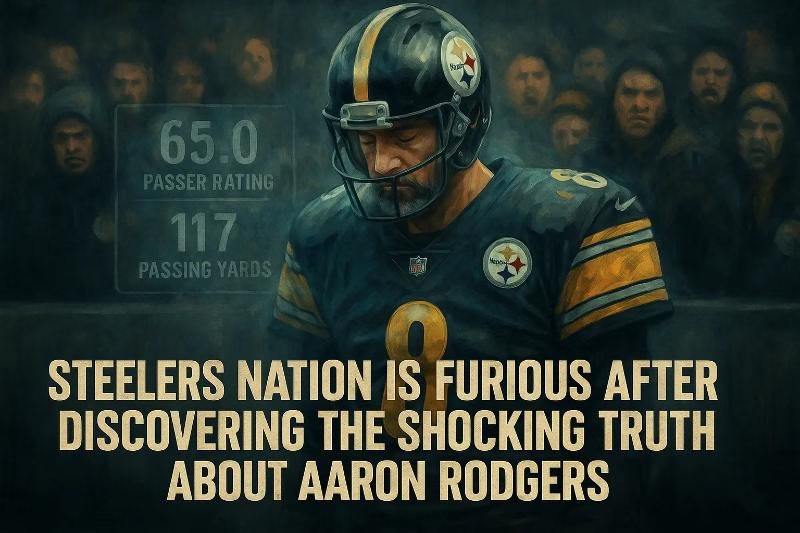
In his most recent performance against the Buffalo Bills, Aaron Rodgers didn’t just look average—he looked outright bad. Completing only 10 of 21 passes for a paltry 117 yards with zero touchdowns, Rodgers posted a 65.0 passer rating that would be concerning for a backup quarterback, let alone a four-time MVP.
This wasn’t an isolated incident. Just weeks earlier against the Chargers, he delivered an even more dismal 50.6 rating. The pattern is clear: when Rodgers struggles, he doesn’t just become inefficient—he becomes a passenger in games where the Steelers need a driver.
Table: Rodgers’ Statistical Decline in 2025
| Category | 2025 Season Stats | Career Average Context |
| Passer Rating | 95.4 | Well below his 102.5 career rating |
| Yards Per Attempt | 6.7 | Down from his 7.6 career average |
| Completion Percentage | 65.20% | Matches his career average |
| Record as Starter | 6-4 | Steelers are 6-6 overall |
You Won’t Believe How Far Rodgers Has Fallen From His MVP Season
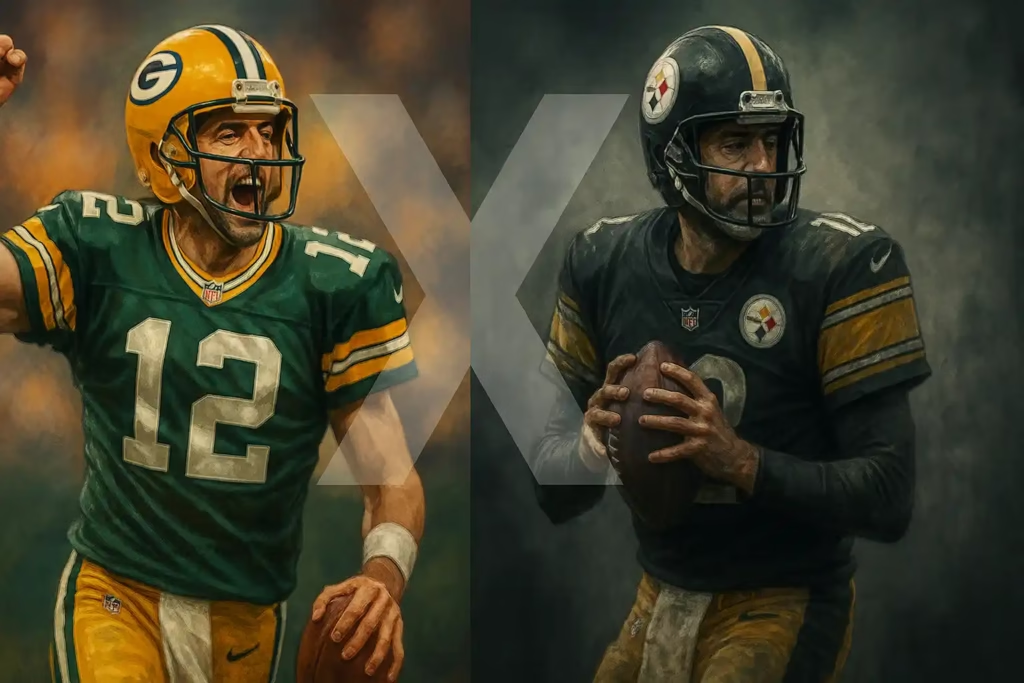
The Stark Comparison
The quarterback who once dominated the league with precision and explosive plays has been reduced to a game manager. While Rodgers maintains a respectable 19-7 touchdown-to-interception ratio , the context reveals a troubling trend.
His production places him in the middle tier of NFL quarterbacks—a noticeable decline from his MVP seasons . When compared to contemporary quarterbacks, the gap becomes embarrassing:
- Drake Maye: 115.0 passer rating, 8.8 yards per attempt
- Matthew Stafford: 111.7 passer rating, 7.7 yards per attempt
- Aaron Rodgers: 95.4 passer rating, 6.7 yards per attempt
The regression isn’t just statistical-it’s philosophical. The Steelers have implemented a conservative offensive approach centered around minimizing mistakes rather than unleashing Rodgers’ former gunslinging tendencies . They’re not trying to win with Rodgers; they’re trying not to lose because of him.
The Uncomfortable Question Mike Tomlin Is Refusing to Answer

Is It Time to Move On?
With Rodgers’ performance declining and the Steelers fighting for playoff positioning, the most uncomfortable question in Pittsburgh isn’t being asked publicly: Is there a quarterback controversy brewing?
The evidence is mounting:
The Injury Factor
Rodgers is currently playing with “at least three fractures” in his left wrist , an injury significant enough that he couldn’t take snaps under center against Buffalo and had to operate exclusively from shotgun and pistol formations . This physical limitation compounds his existing mobility issues and raises questions about whether playing him gives the Steelers the best chance to win.
The Backup Situation
While Mason Rudolph filled in during Rodgers’ injury absence, the Steelers also have Will Howard waiting in the wings—a player coaches nicknamed “Coach Will” for his film study contributions . The organization must balance present competitiveness with future development at the quarterback position.
Inside The Locker Room: Are The Steelers Secretly Regretting Their Decision?
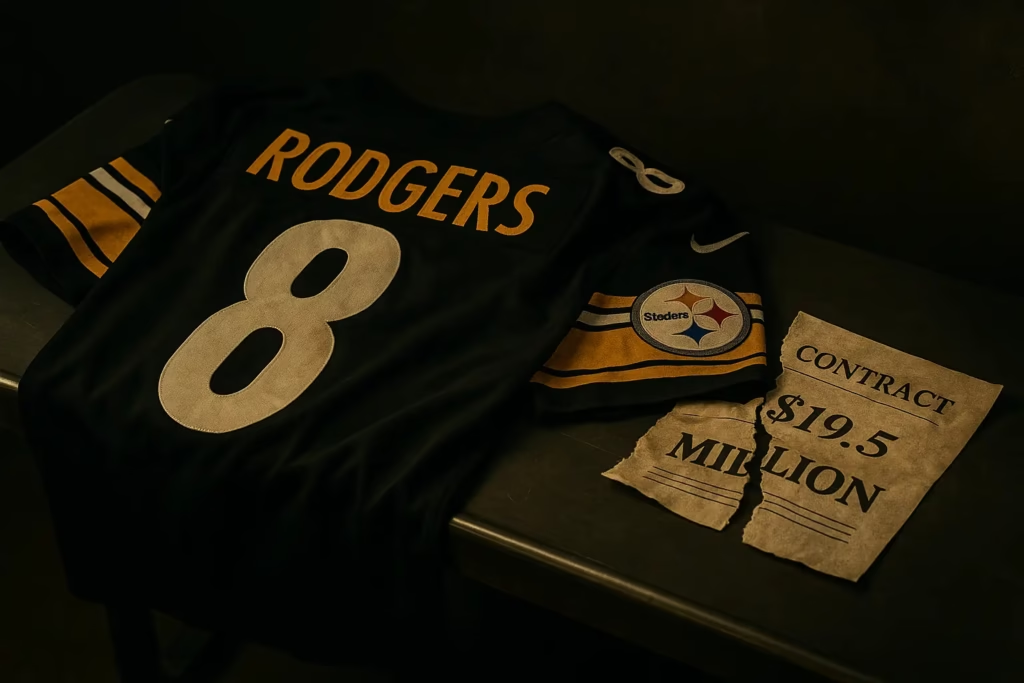
The $19.5 Million Gamble That’s Not Paying Off
When Pittsburgh signed Rodgers to a one-year deal worth up to $19.5 million , they envisioned a veteran leader who could elevate the entire offense. Instead, they’ve gotten a quarterback whose physical limitations are forcing the offense into a constrained, predictable scheme.
The frustration isn’t just statistical—it’s practical. Consider the supporting cast:
- DK Metcalf, the supposed WR1, has become an inconsistent weapon in an offense that can’t effectively push the ball downfield
- The Steelers stood pat at the trade deadline, failing to add receiving help despite obvious needs
- Rodgers’ inability to threaten defenses deep has allowed opponents to crowd the line of scrimmage, negatively impacting the running game
Rodgers himself has maintained a diplomatic public stance, noting after the quiet trade deadline: “What I’ve learned about the trading deadline is there’s a lot of conversation and rarely is there a lot of action” . But behind closed doors, the reality is likely far more frustrating for all parties.
His Arm Isn’t The Problem; It’s This One Frightening Metric
The Real Issue: Dramatically Diminished Efficiency
Conventional wisdom suggests Rodgers’ arm strength has declined, but the data reveals a different, more concerning problem. While he can still make all the throws, his effectiveness has plummeted in critical situations.
Advanced Metric Analysis:
- Crushing Third-Down Inefficiency: In the loss to Green Bay, Rodgers went 1 for 10 on third down, a stunningly poor conversion rate that constantly put the Steelers’ defense in difficult field position
- Shockingly Low Yards Per Attempt: His 6.7 yards per attempt places him well below emerging stars and indicates a dink-and-dunk approach that doesn’t threaten modern NFL defenses
- Pocket Presence Decline: While not reflected in a single stat, Rodgers has taken 20 sacks and shown reduced ability to evade pressure, contributing to the offense’s stagnation
The most frightening part? This isn’t a temporary slump. The numbers reflect a fundamental shift in what Rodgers can reliably deliver at age 41. His mind remains sharp—he’s still identifying defenses and making protection adjustments —but the physical execution can’t keep up with the mental processing.
We Crunched The Numbers And The Verdict On Rodgers’ Future Will Stun You

The Inevitable Conclusion
After analyzing every statistic, every game, and every contextual factor, the conclusion is inescapable: Aaron Rodgers’ tenure as a starting NFL quarterback should end after this season.
The evidence is overwhelming:
Physical Decline Is Irreversible
At 41, with multiple significant injuries in recent years including the current wrist fractures , Rodgers’ body can no longer withstand the demands of elite NFL quarterback play. His limited mobility and reduced durability make him a liability in a league increasingly dominated by athletic quarterbacks.
The Steelers’ Future Timeline Demands Change
Pittsburgh cannot afford to waste another season on a temporary solution. With the organization needing to either develop Will Howard or draft their quarterback of the future , committing to Rodgers for 2026 would be organizational malpractice.
The Performance Doesn’t Justify the Investment
While his $19.5 million contract seemed reasonable for a potential franchise quarterback, the production hasn’t matched the price tag. Middle-tier quarterback performance doesn’t elevate a team to championship contention—it keeps them mired in mediocrity.
The most stunning part of this verdict? Rodgers seems to know it himself. He’s previously suggested that 2025 might be his final season , and his performance indicates he may be playing out the string rather than building toward something greater.
The Bottom Line
The Pittsburgh Steelers took a $19.5 million gamble on a legend, but the experiment has failed. The numbers don’t lie: Aaron Rodgers is no longer the quarterback who can lead a team to championships. He’s become a game manager at best, a liability at worst.
For Steelers Nation, the truth is hard to swallow. The glorious comeback story they envisioned has turned into a disappointing farewell tour. The front office faces a critical decision this offseason—one that should be surprisingly easy based on the brutal statistical evidence.
The curtain is closing on one of football’s most brilliant careers. The only question remaining is whether the Steelers are wise enough to recognize the final act.