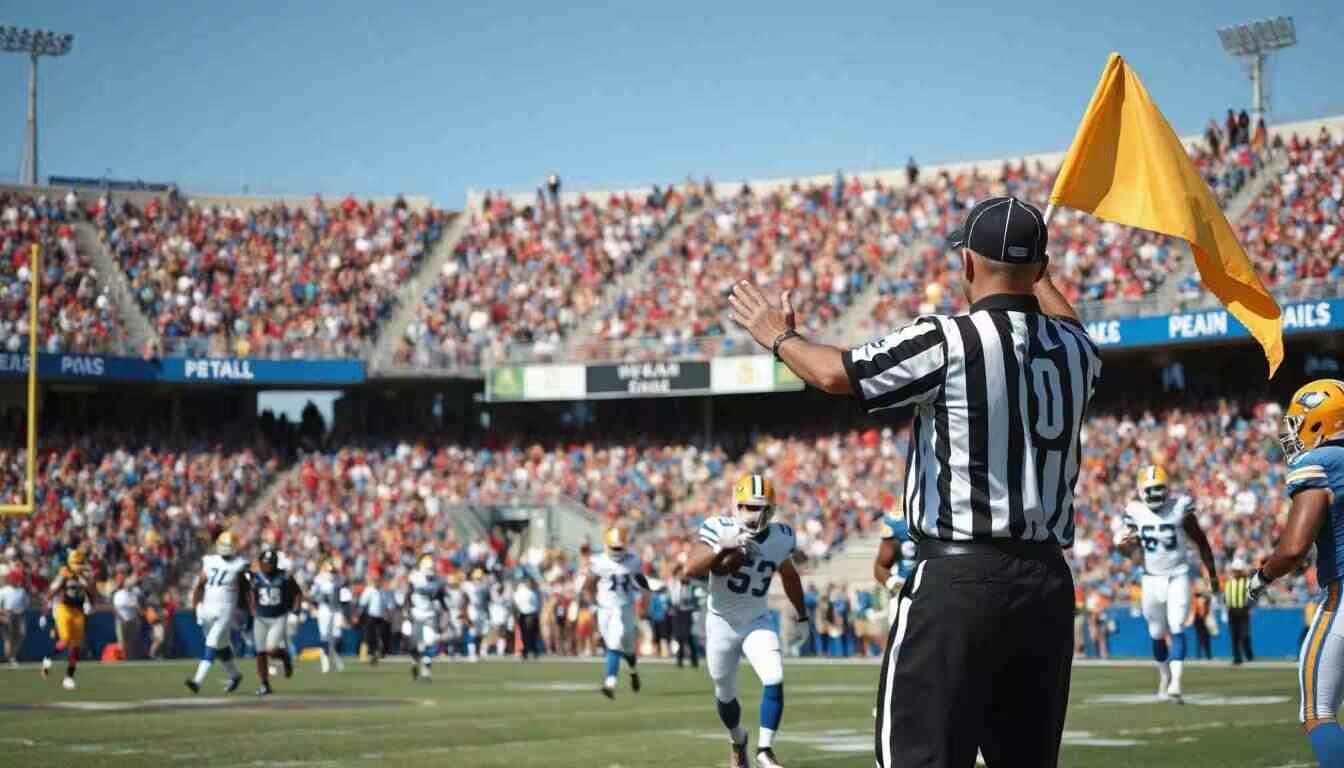
In the NFL, defensive pass interference generally carries an automatic first down for the offense, with enforcement based on where the foul occurs. Offensive pass interference is a different foul and does not award the offense a new first down.
Pass interference is illegal contact that materially hinders an eligible player’s opportunity to catch a forward pass, subject to the NFL rulebook’s conditions. The penalty depends on which team commits the foul and where it happens. College-football rules differ, so don’t apply an NCAA example to an NFL game without checking the correct rule set.
Does defensive pass interference give an automatic first down?
In the NFL, defensive pass interference carries an automatic first down. Enforcement is normally from the spot of the foul; special provisions apply when the foul occurs in the end zone or close to the line of scrimmage. Consult the current rulebook for the exact enforcement in a particular play.
That means the result is not simply “add 10 yards” in every situation. The location of the foul matters. For example, a foul well downfield can place the ball near the spot where the interference occurred, while an end-zone foul is handled under the rulebook’s specific provision.
What happens if the offense commits pass interference?
Offensive pass interference is penalised against the attacking team, generally by enforcing 10 yards from the previous spot. It does not give the offense an automatic first down. The officials apply the down and enforcement rules for that foul; for the precise down consequence and any exception, use the current NFL rulebook rather than a generic summary.
NFL vs. college rules
The NFL and college football use different penalty distances and enforcement details for some pass-interference situations. A college example involving a 15-yard penalty should not be copied into an NFL explainer as if the same distance always applied. Viewers should identify the competition first, then refer to that competition’s rules.
Why the location of the foul matters
- Downfield: defensive pass interference can result in the ball being placed at the spot of the foul, with an automatic first down.
- In the end zone: the rulebook has a special enforcement provision instead of simply placing the ball at a point beyond the end line.
- Near the line of scrimmage: the exact location can affect how the foul is classified and enforced.
- Offensive foul: enforcement is against the offense, and the penalty does not grant it an automatic first down.
Example
If a defensive back illegally hinders an eligible receiver well downfield before the pass arrives, officials may rule defensive pass interference. The NFL’s enforcement places the ball under the spot-foul rule and awards an automatic first down. The exact yard line depends on where the foul occurred; it is not accurate to describe every NFL pass-interference call as a fixed 10-yard penalty.
Official source
- NFL Football Operations: 2026 NFL Rulebook — consult Rule 8 for pass interference and the official penalty/enforcement provisions.
- NFL Football Operations: NFL rulebook archive — background and rule references.
Updated October 26, 2026. The earlier version mixed fixed-yardage language and college rules into its NFL explanation. This rewrite separates the rule sets and directs readers to the official enforcement provisions. Original URL retained.