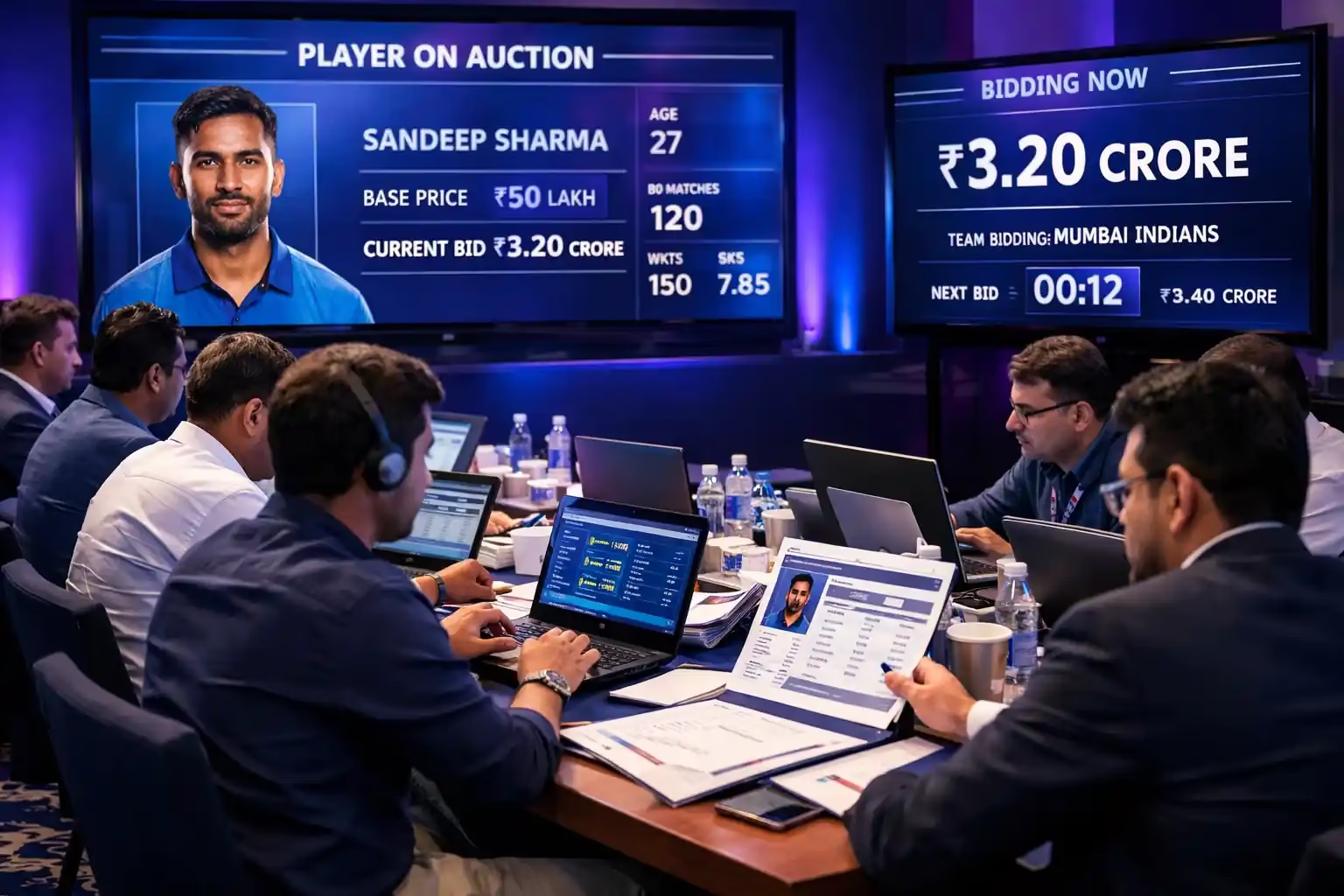
A strong IPL auction is not just a contest to buy the most famous players. Franchises have to build a balanced squad within the auction purse, reserve money for roles that remain unfilled and consider how the players fit the likely XI.
Good auction planning begins before bidding. Teams assess their retained players, identify gaps, rank targets, set price limits and prepare alternatives in case another franchise drives a player’s price above their valuation. The goal is a squad with enough skill, depth and flexibility to handle a long T20 season.
1. Start with the roster and the rules
Before assigning prices, a franchise needs a clear picture of its retained players, releases, available slots, overseas-player limits and auction purse under that season’s regulations. Auction conditions can change between seasons, so a current-year plan should use the official rules for that auction rather than relying on an older article or a generic budget figure.
- List the likely first-choice XI and the backups needed for each role.
- Mark positions where the squad lacks a specialist or a suitable replacement.
- Keep the overseas-player rules and squad composition limits in view.
- Recalculate the remaining purse after each purchase.
2. Buy roles, not just names
Every squad needs players who can cover different phases. A franchise might need an opener who can attack the powerplay, a batter who handles spin in the middle overs, a finisher, new-ball bowlers, death-overs specialists and spinners who can control the middle phase. All-rounders can add flexibility, but only when their batting and bowling roles are clear.
Before bidding on a player, the recruitment team should be able to answer: which position will this player fill, in what match situations will he play, and who is the alternative if he is unavailable?
3. Set a valuation and a walk-away price
A player’s auction price is not a direct measure of his future performance. Teams should estimate the player’s expected contribution, availability, role scarcity and fit with the squad, then set a maximum price before the bidding begins. If the price exceeds that limit, the team should be ready to move to its next target instead of spending impulsively.
4. Balance Indian and overseas options
Overseas players can provide specialist skills and international experience, but the number permitted in a playing XI is limited under IPL rules. Indian players are therefore particularly important to squad balance. A franchise should not assume it can solve every weakness with an overseas signing; the likely combinations must work within the playing conditions.
Good planning creates multiple viable XIs—for example, one combination suited to a spin-friendly surface and another with an additional seamer. Flexibility matters because venue, opponent and toss can change the best selection.
5. Use data with cricket judgement
Historical batter-versus-bowler matchups, strike rates, economy rates and venue records can help identify strengths and risks. Those numbers should not be used in isolation: sample sizes can be small, roles can change, and a player’s performance depends on conditions and opportunity. Scouting and video review can reveal how a player achieves the numbers and whether that skill is likely to fit the new team.
6. Account for availability and uncertainty
- Injury history: estimate how much of the season a player might realistically be available for without treating past injury as a certain future outcome.
- Role clarity: avoid buying several players who all expect the same batting position or phase of bowling.
- Form vs. long-term evidence: a short run of strong performances can justify attention but should not erase a larger body of evidence.
- Replacement value: a squad needs cover in case a player becomes unavailable or is called away.
7. Measure the auction by what happens afterward
The result of an auction should be assessed after the squad has played. Useful questions include whether the team filled its main role gaps, whether players received the expected opportunities, and how well the combinations worked through the season. A high auction price or a strong social-media reaction is not itself proof of success.
For related strategy, see our IPL powerplay tactics guide and Net Run Rate explainer.
Official reference
- Indian Premier League: official website — current auction announcements, rules, squad records and player profiles.
Updated October 26, 2026. Expanded into an evergreen squad-construction guide without assuming the auction rules or purse for a future season.